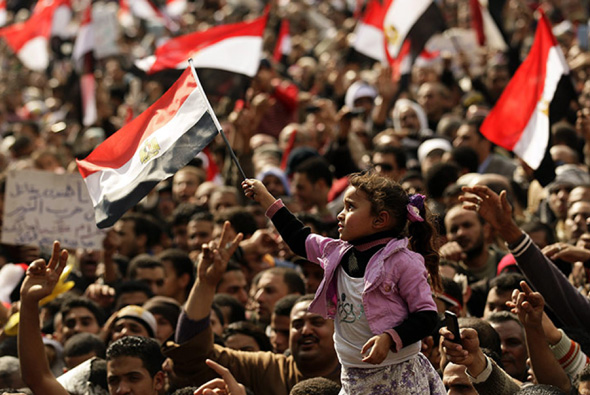
 Now that the smoke is clearing in Tahrir Square after two and a half years of upheaval—and thousands of deaths—the meaning of the Arab Spring and the intent of the Islamists is becoming clear. First, the Arab Spring was/is an Islamic Awakening, as confirmed in five elections/ referenda in Egypt, where Islamists consistently won two-thirds of the vote in the freest elections in any country in recent times. Money was not a significant factor thanks to limits on candidates’ financing (no corporate or Super PACs a la US, or foreign donations), the brainwashing of the old order no longer worked, and the Mubarak thugs who stuffed ballot boxes were hiding in their holes. We can only envy the Egyptians.
The strategy of Egypt’s Muslim Brotherhood (MB) for 80 years has been to patiently build alternative social structures to the corrupt ‘soft state’ (especially in education, health, charity), and eventually overthrowing the old corrupt order peacefully through the ballot box. Then to work with other forces, both left and right, to usher in a new Islamic order based on their grassroots experience, where—just as in the first Islamic state under Muhammad in Medina—all facets of society would have their place, where laws and government would conform with sharia, as confirmed by senior Islamic scholars. Foreign relations were shifting towards a more confrontational stance with Israel, and more cooperation with other Islamic governments and movements, in particular Iran, but throughout the Muslim world. President Morsi’s first stop was Saudi Arabia, which initially promised support. Qatar’s Sheikh Hamad sent a whopping $8b in aid ($2b of which was since returned by the coupmakers).
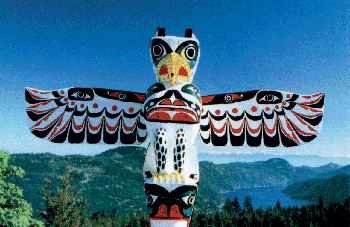 Ramadan is a good time to reflect on what Islam has to say about two of Canada’s burning problems—our penchant for environmental destruction and Prime Minister Harper’s attempt to return to a blatant assimilation policy for Natives.
 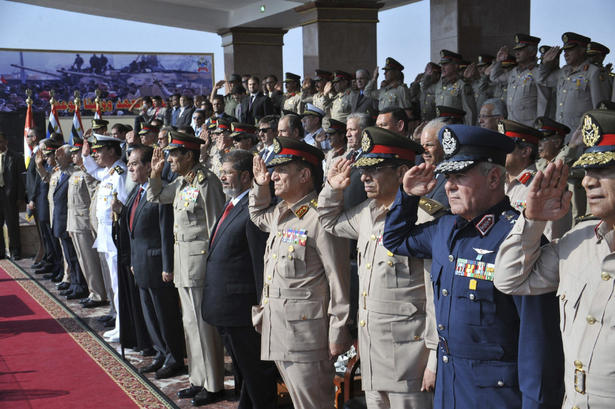 After more than a century of secuarlisation, Egypt's cultural life is set to revolve again around the Quran. "The Quran is our Constitution" exhorted President Mohamed Morsi during the cliff-hanger presidential election, Egypt’s first ever
 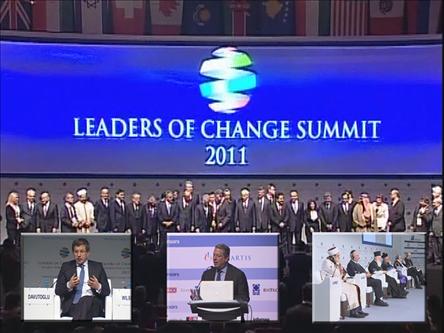 Researches Foundation (TUGAV) founded in 1987. The theme was
“Changing to meet, meeting to change”, emphasising the radical changes in
policymakers’ thinking now taking place and the importance of sharing new ideas
to address the urgent problems facing particularly the Middle East.
Researches Foundation (TUGAV) founded in 1987. The theme was
“Changing to meet, meeting to change”, emphasising the radical changes in
policymakers’ thinking now taking place and the importance of sharing new ideas
to address the urgent problems facing particularly the Middle East.